



Doctoral studies / Doctoral programmes / Telecommunications
A PhD graduate in Telecommunications is a highly qualified expert in information and communication technologies (ICT), communication networks, and multimedia systems, with a deep understanding of current global research trends and emerging technologies. Graduates possess strong theoretical foundations combined with advanced research skills, enabling them to formulate, analyse, and solve complex and non-standard problems using original and innovative approaches. The programme prepares graduates for independent and collaborative scientific research, as well as for leadership roles in academia, research institutions, and high-technology industries. Graduates are capable of designing, analysing, and optimizing modern communication systems and networks, including wired and wireless communications, multimedia services, and data-intensive infrastructures. They demonstrate the ability to creatively apply advanced communication theories and technologies across diverse application domains. Doctoral graduates master scientific methods of basic and applied research in telecommunications and ICT. They independently conduct research with a high level of scientific integrity, critically evaluate results, and contribute original findings that advance the state of the art. Their research outputs are suitable for dissemination through international peer-reviewed journals, conferences, and professional platforms. Graduates actively follow technological and scientific developments and are committed to lifelong learning in a rapidly evolving field. In addition to technical expertise, graduates acquire strong managerial and leadership skills, including project planning, coordination of research and development teams, and effective communication with experts from different disciplines. They are prepared to apply legal, ethical, social, and economic principles in professional and research activities.
Graduates find employment in academic and industrial research, telecommunications and network industries, multimedia and data services, and innovation-driven technology companies. Typical roles include telecommunications systems architect, network and ICT researcher, R&D project leader, and technology strategist. Graduates are well prepared to lead large-scale research and development projects, contribute to international research collaborations, and shape the future of communication technologies, fully aligned with the doctoral (EQF Level 8) profile in telecommunications.
Intelligent fiber-optic measurement systems for Industry 5.0
Daniel Benedikovic
Multi-domain photonic device engineering for hybrid silicon-compatible integrated circuits
Daniel Benedikovic
Intelligent photonic device design using hybrid deep learning architectures
Daniel Benedikovic
Wide bandgap integrated photonic architectures for visible and quantum technologies
Daniel Benedikovic
Lokalizácia v mobilných rádiových sieťach 5G a B5G
Juraj Machaj
Predikcia QoE v mobilných rádiových sieťach
Juraj Machaj
Multimodálna detekcia kyberšikany v online komunikácii
Miroslav Benčo
Efektívna adaptácia a evaluácia LLM pre morfologicky bohaté jazyky s nízkymi zdrojmi
Miroslav Benčo
Optimalizácia modelov AI pre rekonštrukciu medicínskych obrazových dát
Patrik Kamencay
Výskum lokalizácie mobilných objektov s využitím informácie o stave rádiového kanála v prostredí rádiových sietí
Peter Brída
Research on mobile object localization based on radio channel state information in wireless network environments
Peter Brída
Interpretovateľné modely neurónových sietí pre sémantickú analýzu vizuálne stimulovaných mozgových signálov
Róbert Hudec
Predikcia výkonu slnečného žiarenia
Róbert Hudec
Interpretable Speech Signal Modelling for Speaker Characterization
Roman Jarina
Compact and Generalizable Neural Models for Speech and Audio Processing
Roman Jarina
Robust and Time-Invariant Speaker Voice Modelling Using Deep Learning
Roman Jarina

Miroslav Benčo

Daniel Benedikovič
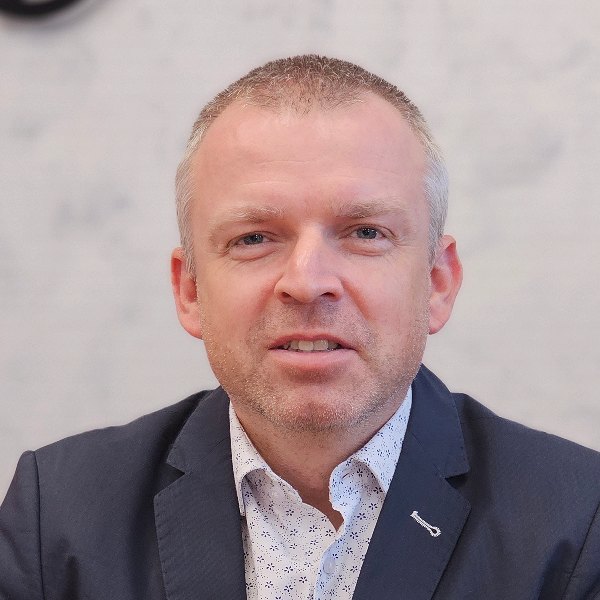
Peter Brída
Milan Dado
Róbert Hudec
Maroš Jakubec
Roman Jarina
Daniel Káčik
Patrik Kamencay
Juraj Machaj
Slavomír Matúška
Róbert Hudec
Peter Počta